


The Keyboard Sonata Of Domenico Scarlatti
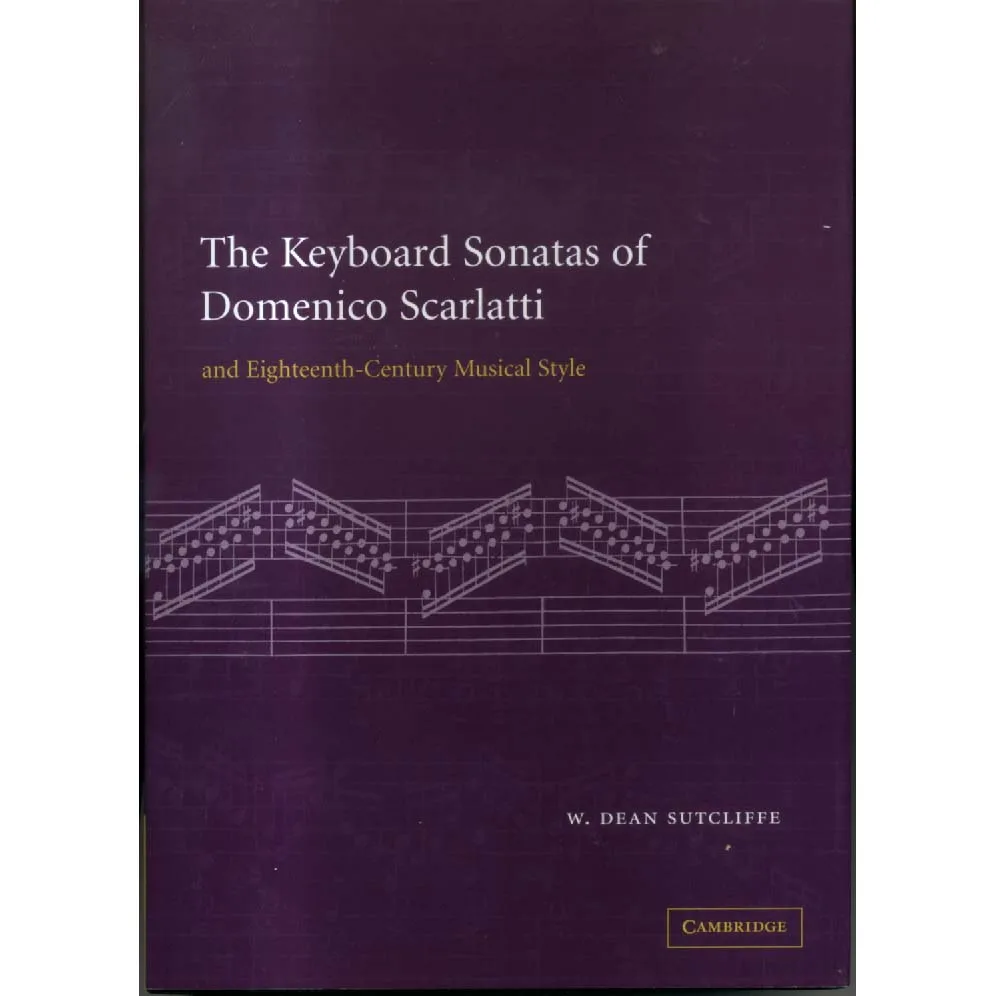
Publisher: Cambridge University Press
Format: Hardback
ISBN: 9780521481403
There are composers who build cathedrals of sound, and then there is Domenico Scarlatti, who appears to have built an entire architectural complex out of harpsichords, hand-crossings, Iberian sunshine, and the faint suspicion that music ought occasionally to surprise the person playing it.
The Keyboard Sonatas of Domenico Scarlatti (2003) by W. Dean Sutcliffe is what happens when a scholar looks at Scarlatti’s 500+ sonatas and decides that they are not merely charming curiosities for nimble fingers, but a vast, intricate, slightly mischievous universe deserving serious attention. This is not a casual introduction. It is a deep dive into a repertoire that has long sat somewhere between “delightfully accessible” and “quietly baffling,” depending on whether you are listening or attempting to play.
Scarlatti’s sonatas have a reputation: short, sparkling, technically inventive, and just odd enough to keep musicologists employed. They are full of rhythmic quirks, unexpected harmonies, Spanish and Portuguese influences, and moments where the keyboardist is required to cross hands in a way that suggests either brilliance or a mild prank on the performer. Sutcliffe takes all of this seriously, which is both admirable and, in its way, faintly intimidating.
What emerges is a portrait of Scarlatti not as a composer of pleasant miniatures, but as a master of form, gesture and musical wit. These sonatas may be compact, but they are anything but simple. Patterns repeat and mutate, ideas are tested and twisted, and the music seems constantly aware of its own possibilities. It is as though Scarlatti is experimenting in real time, seeing just how far a keyboard can be pushed before it begins to protest.
There is, naturally, a layer of irony in turning something so lively and playful into a subject of rigorous academic analysis. One imagines Scarlatti himself, somewhere in eighteenth-century Iberia, cheerfully improvising while future scholars take notes on structural nuance. Yet this is precisely the point: the more closely you look, the more these pieces reveal their sophistication. What sounds effortless is, in fact, carefully wrought, and what feels spontaneous is often the result of a mind working with extraordinary control.
Sutcliffe’s study is therefore both an act of admiration and an act of explanation. It situates the sonatas in their historical context, examines their stylistic features, and explores how they function as music rather than merely as technical exercises. This is a book for readers who want to understand not just that Scarlatti is enjoyable, but why—and who are prepared to follow the argument through detailed musical discussion along the way.
For readers of Crappy Old Books, this is a fine specimen of serious musical scholarship: elegant, focused, and quietly demanding. It will look excellent on a shelf, suggesting a refined interest in baroque keyboard repertoire, while also serving as a reminder that behind every apparently effortless piece of music lies a great deal of thought, craft, and, occasionally, scholarly analysis that could make your head cross hands as well.
Condition: Fine, which feels entirely appropriate for a book about precision, control and elegance. A crisp, handsome copy of a thoughtful and richly detailed study of Scarlatti’s sonatas—proof that even the most playful music can sustain the most serious attention.
Keep browsing: See more Music books Other books by W Dean Sutcliffe
